
Point your camera, and the building in front of you answers
No more opening a map, searching and matching it to what is in front of you. The moment you point your camera, information appears on the building you see.
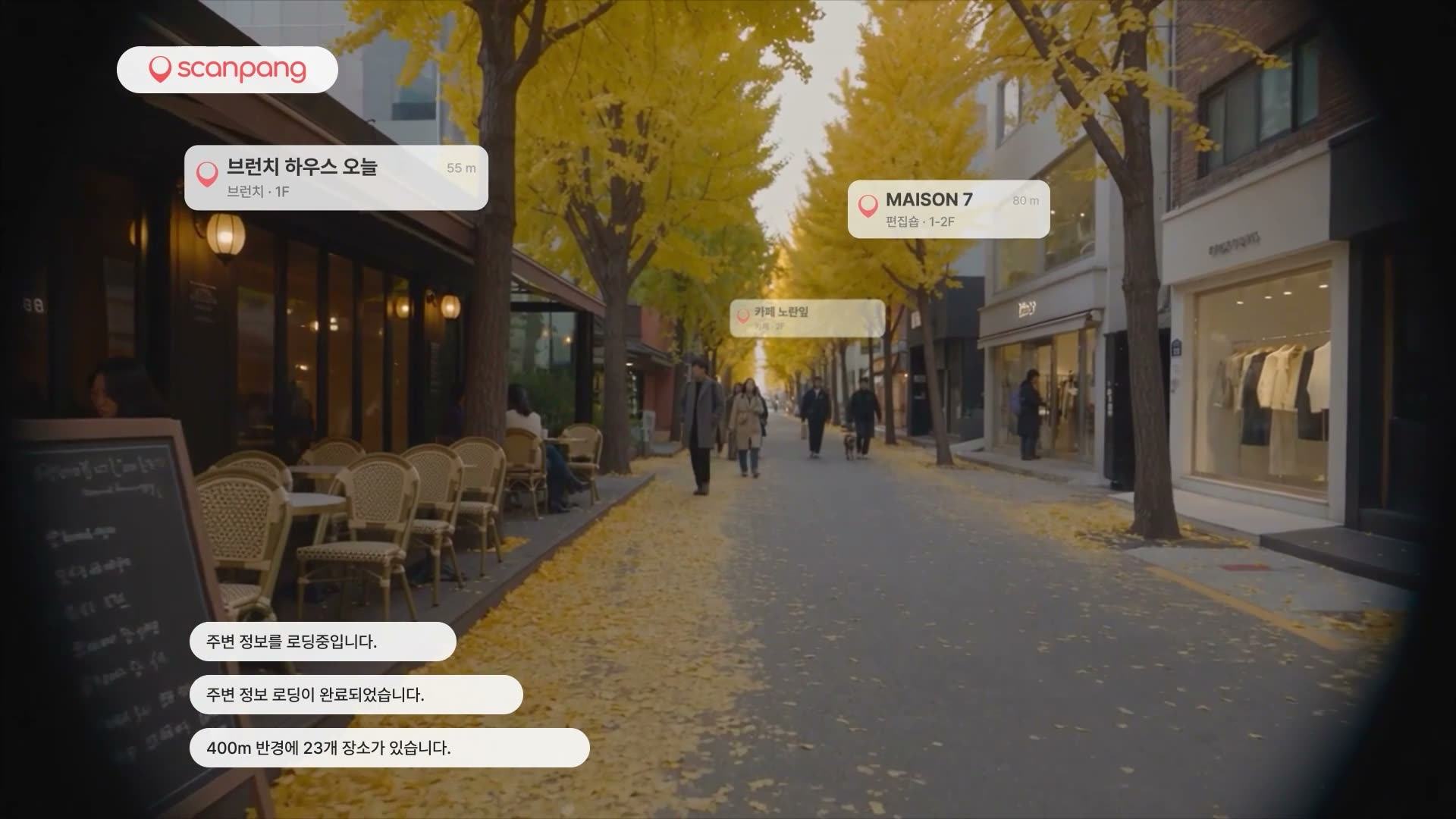
From delivery to AI glasses, one layer answers
The intro video in four scenes. Press a scene to play from there.
The moment a familiar street becomes interesting
- 01 SCAN
Scan the place you are curious about
Point your camera at a building or place in front of you. No searching, no waiting.
- 02 CONNECT
Meet the information it holds
Name, address, tenants, entrances and store content appear right on the building you see.
- 03 DISCOVER
Discover something new every day
A familiar street looks new. People, robots and AI glasses all read the space the same way.
A building layer that works on any device and app

Delivery and logistics
Cuts the time spent finding the entrance and unit after arriving at the building.
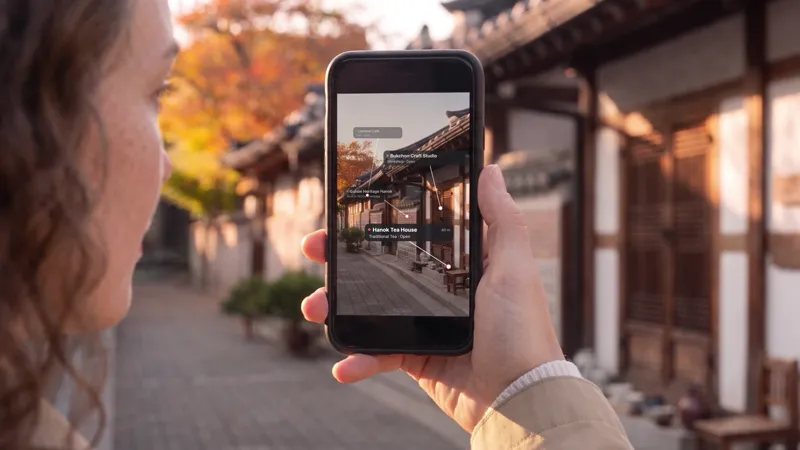
Tourism and languages
Shows landmark and hanok information in the traveller's own language.
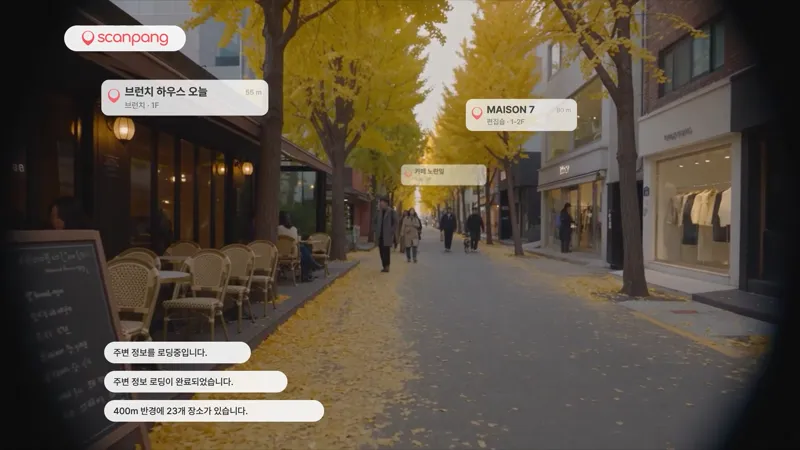
Retail and stores
Just walk, and nearby store information and content appear in front of you.

Mobility and navigation
Even after navigation ends, the destination building is picked out on screen.
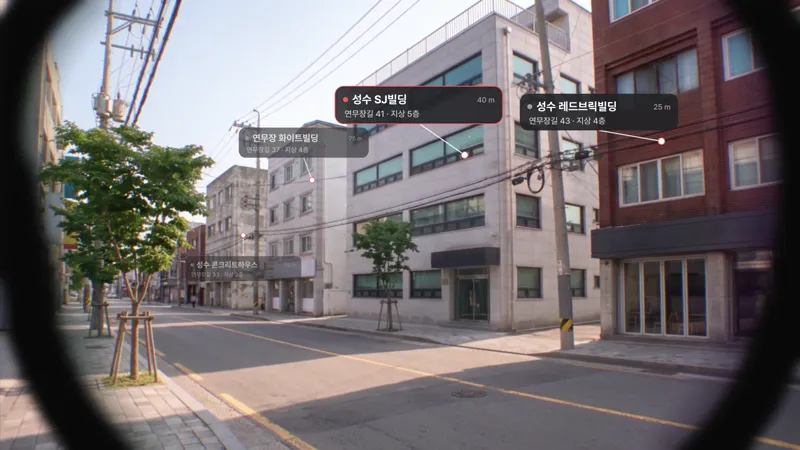
Robots · AI agents
The information API that robots and software call to identify a building.
Information that lands on the building the moment you point
- 1
Shown on sight
Search and waiting are gone. On-device computation shows results without delay.
- 2
Several buildings at once
Labels attach to the visible face of every building in view at once.
- 3
Labels that stay on the building
Labels stay on the building as distance and angle change, as you walk and turn, and when buildings overlap. Tap a label to open the building details.
The end goal is the real-world information layer for AI glasses
The race in AI glasses hardware is already on, but the real-world information layer that runs on top of it is still empty.
As maps and messengers did in the early smartphone years, whoever claims the first layer sets the standard.
ScanPang proves itself on phones and in cars first, then extends to glasses.
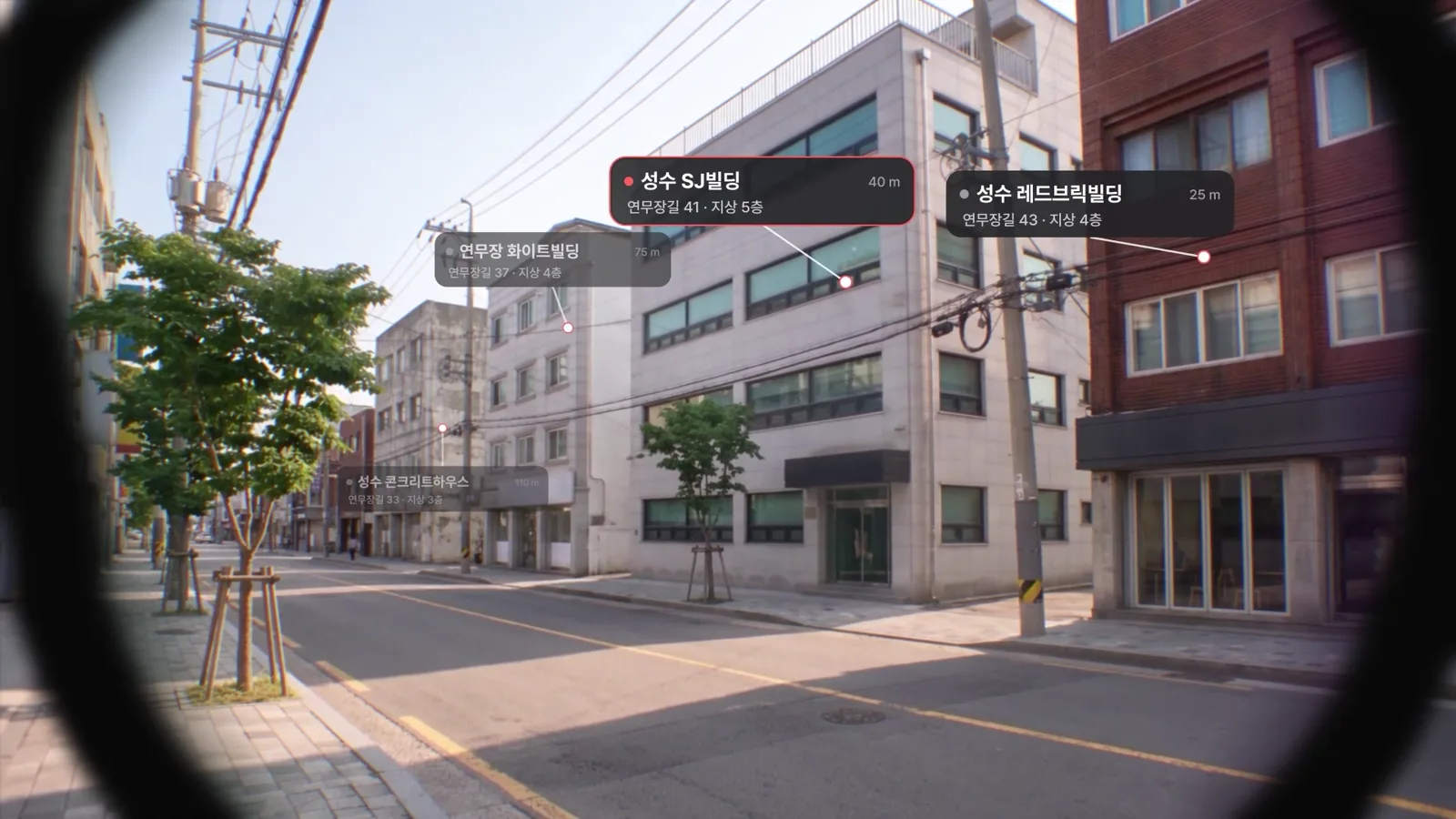
The same structure on any device
From a phone to a car display to AI glasses, the way it answers “the building I am looking at” stays the same.
Compute glasses can afford
Linear maths with no spatial map and no neural net, so it runs on wearables with tight power and heat budgets.
Ask about a building by voice
“What is this building?” is all it takes. Even buildings without signs show their tenants by floor and their entrances.
Service details and launch news are on the official ScanPang site.
Considering ScanPang for your product?
We will send documentation on SDK integration and the building information API. We are looking for partners in delivery, tourism, retail, mobility and robotics.